
.svg)


Heirlooms of the future, a feature in Homes and Antiques magazine.
View Feature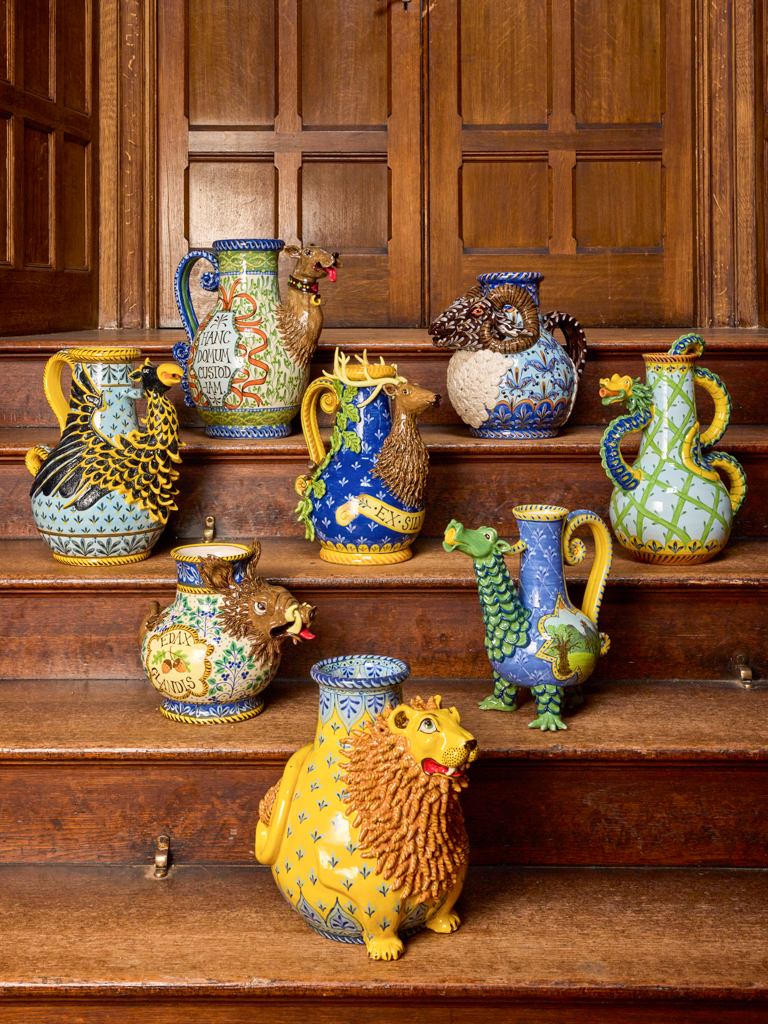
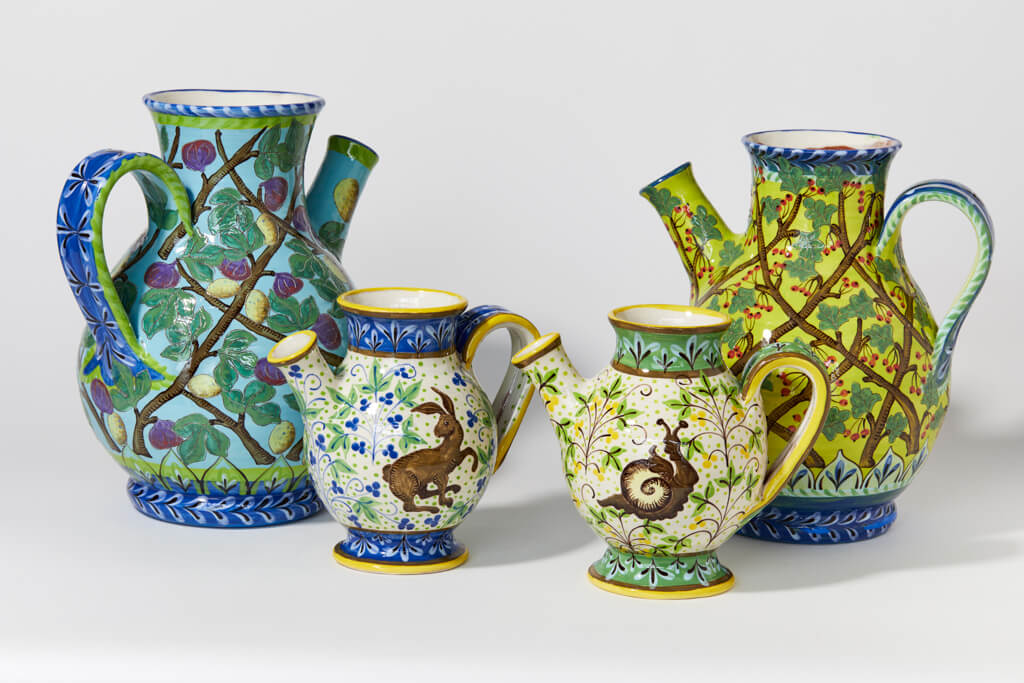
In summer 2024 I was contacted by the owner of Villa da Lisca, a property dating back to the 15th century in Zevio, just outside Verona. She wanted to commission three collections of ceramics specifically for display in this property, currently undergoing a sequence of renovations. She was particularly interested in my work as it strongly references Italian Renaissance maiolica, and had seen my ‘Menopause in Maiolica’ series at ‘Collect’ at Somerset House, London, in 2024. The maternal line of the da Liscas will end with the client’s mother and she wants to honour the family with this commission.
Read Article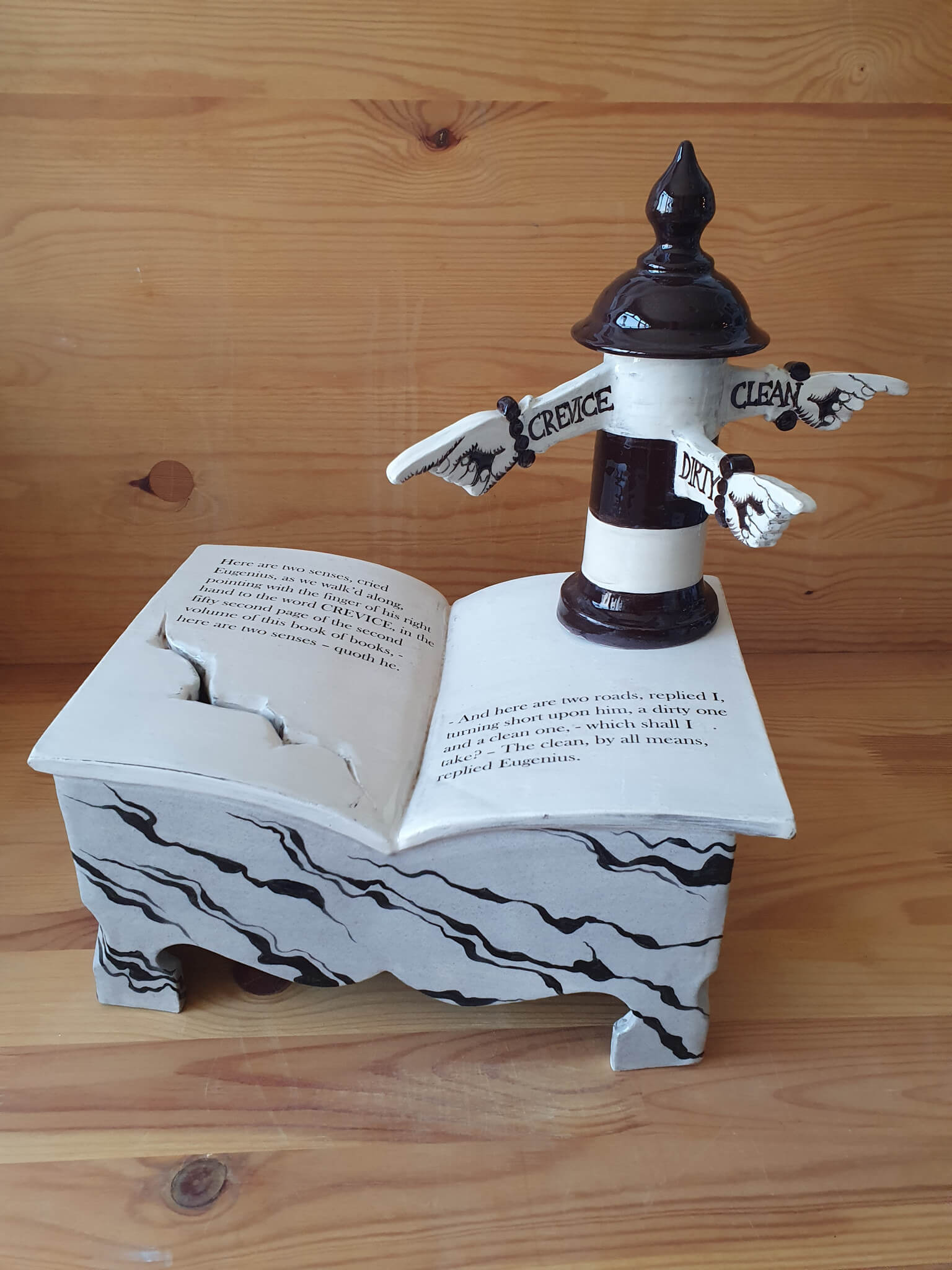
In 2020 ceramicist Katrin Moye was due to hold an exhibition of works responding to the novel, The Life and Opinions of Tristram Shandy, Gentleman (1759–67) at the Laurence Sterne Trust’s Shandy Hall. The coronavirus pandemic delayed and shaped her work. Filthy Trash, as the exhibition came to be called, finally took place in July and August 2021, featuring nine sculptures inspired by the Delftware and Staffordshire figures of the period. The nine three-dimensional pieces, corresponding to the nine volumes of Sterne’s novel, explore the bawdy side of Tristram Shandy, focussing on the crevice in the wall, the hot chestnut, Dolly’s sealing wax, a nose/book/mountainous promontory, a cabbage plot with a slit petticoat, a squirt, Toby’s pipe on the fender, a keyhole, and a buttonhole.1
Read Article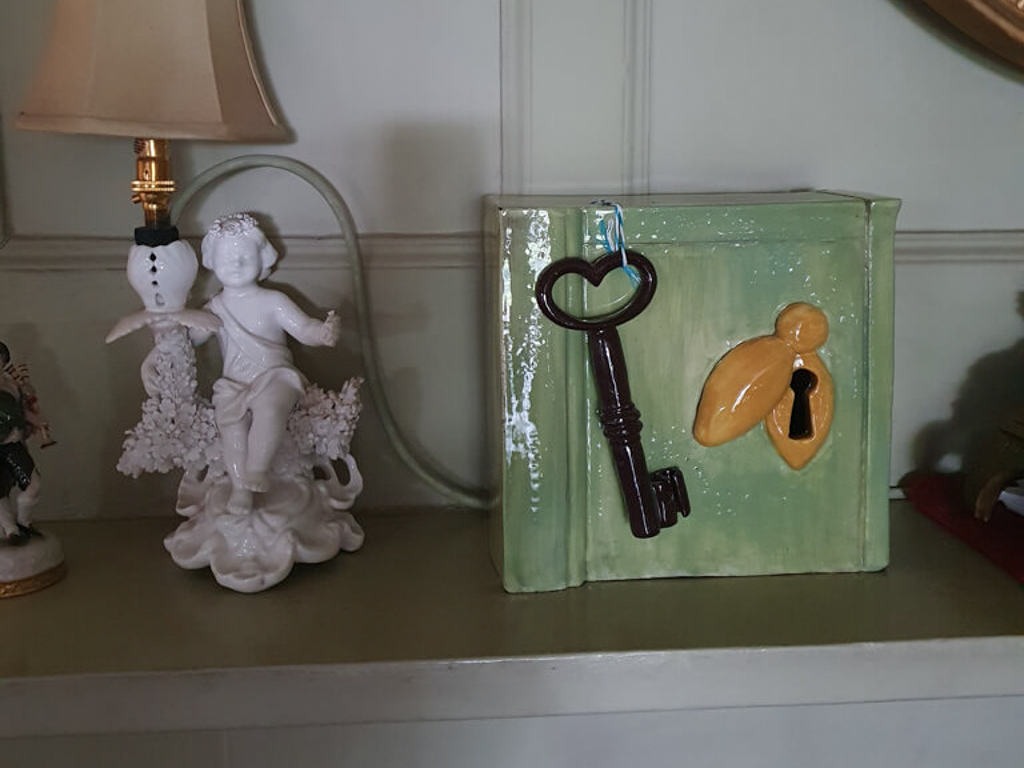
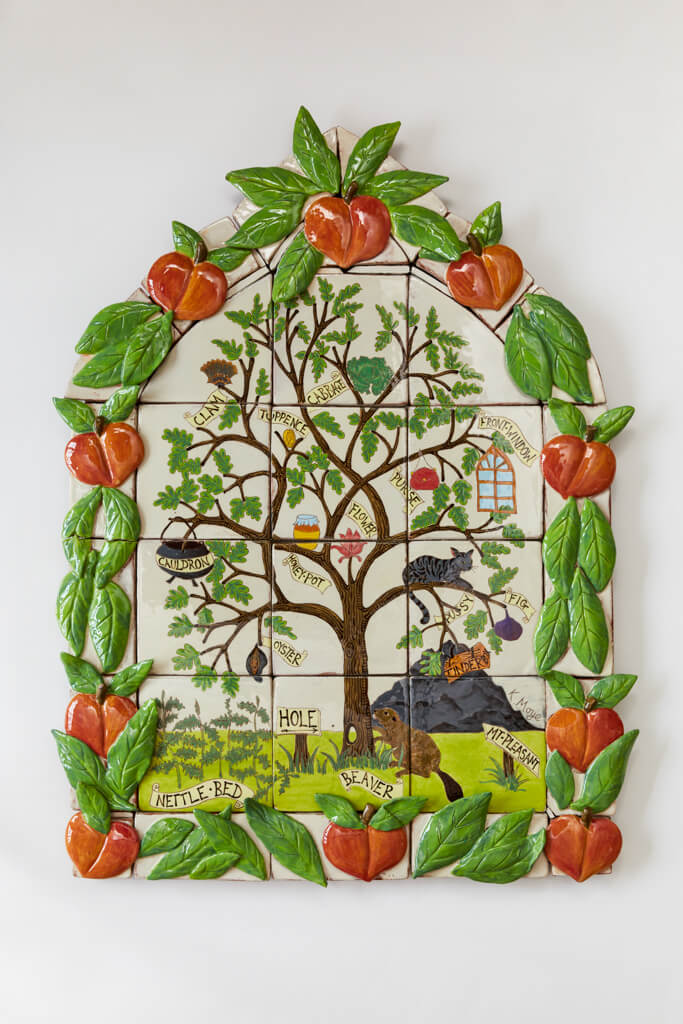
Ceramic objects are time machines. The time-collapsing effect of seeing a Roman roof tile with cats’ pawprints tracked across it, or a Minoan vase covered with expressive swooshes of brushstrokes, is the best way of time-travelling I know. Things that were fresh out of the kiln hundreds of years ago are exactly the same as they are now, which is like a kind of magic trick.
Read Article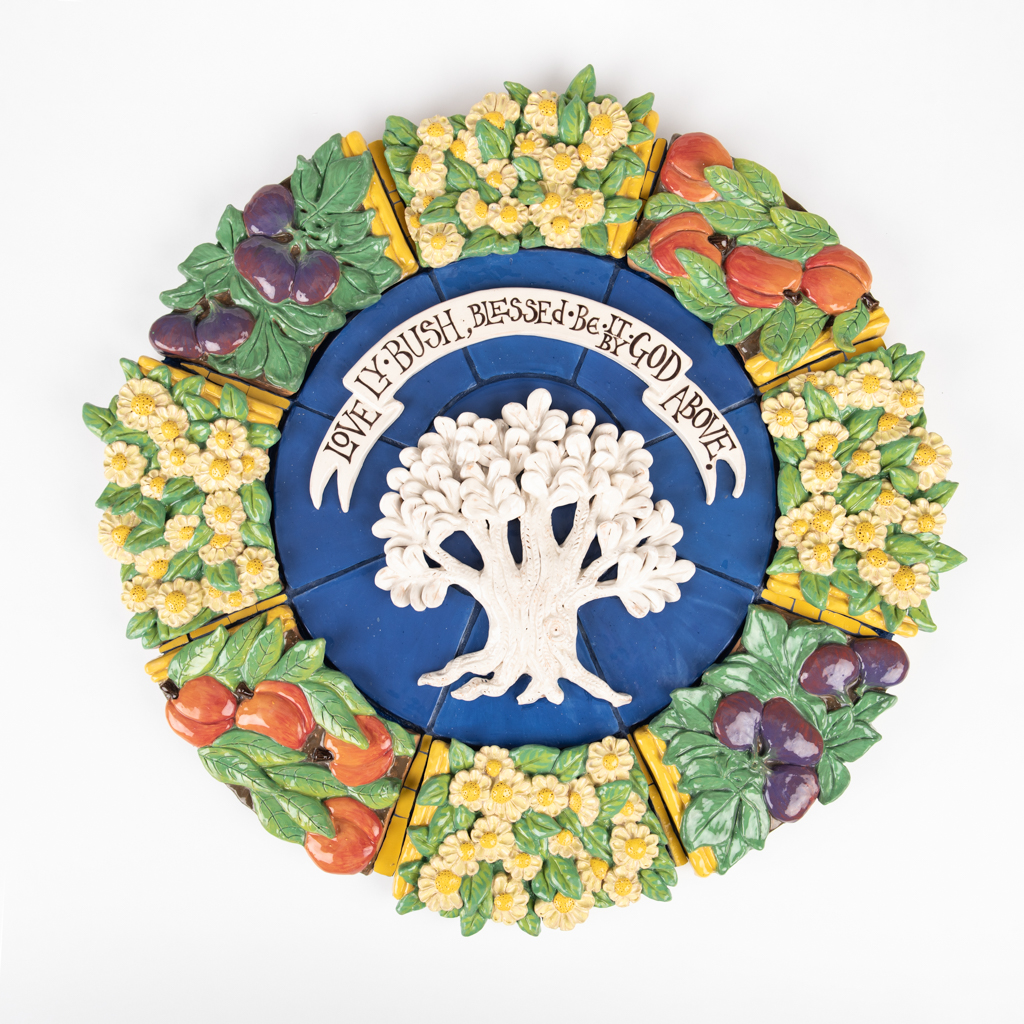
Gwerful Mechain* was a well-known and popular Welsh female poet active between around 1460 and 1502. As well as producing devotional poetry that explored the more usual themes of Christianity, she wrote a number of poems that focused on more profane matters.
Read Article
I fell in love with the Italian Renaissance Maiolica style whilst on holiday in central Italy in summer 2019. The bold colours, delicate and dense repeating patterns, the illustrative style of decoration transcribed with breathtaking skill onto myriad, elegant shapes with sinuous, twisting handles, all brought the past of hundreds of years ago right into the present for me – something that I feel handmade ceramics can do uniquely effectively, being as fresh and vibrant today as the day they came out of the wood kiln 500 years ago.
Read Article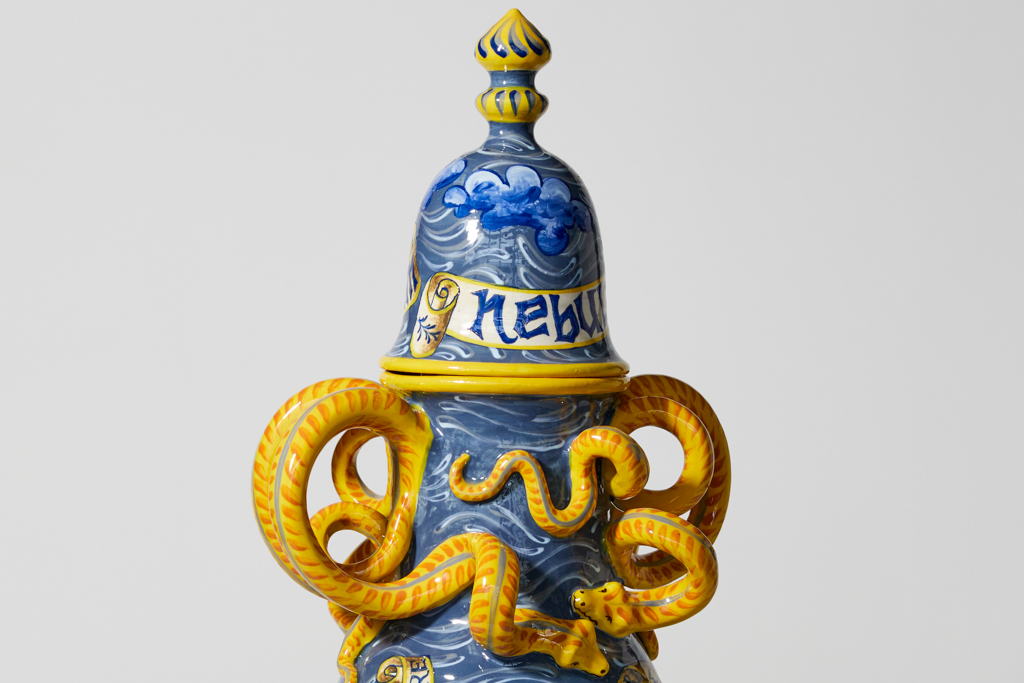
Katrin's piece, shown at Collect Open 2024 as part of the collection 'A Menopause in Maiolica', is now on display at the Victoria and Albert Museum, London in the ceramics colletion.
Read Article
Back in the first lockdown of March 2020 I was working on a project that had been gestating for a long time, about my response to the 1759 novel ‘The Life and Opinions of Tristram Shandy, Gentleman’, by Laurence Sterne. The news coming over the radio during February and early March about Covid-19 was increasingly alarming, and it made me wonder how Sterne and his contemporaries would have responded to an equivalent epidemic in the mid-1700s. After noodling about online with this in mind, I happened upon a book written by John Wesley, the founder of the Methodist church, called ‘Primitive Physic’. As well as being inspirational spiritually, Wesley turned out to have had very strongly held and detailed beliefs about health and lifestyle.
Read Article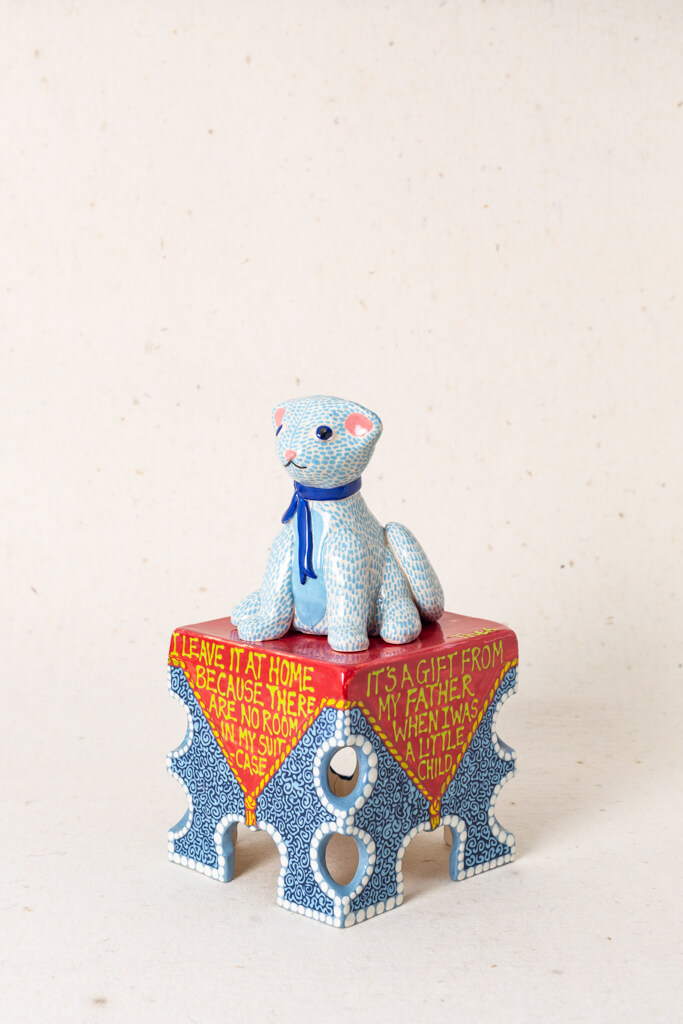
In 2017-18, I was Artist in Residence at Nottingham University’s Lakeside Arts Centre. During this time I worked with International students on ‘Things From Home’, an Arts Council funded project to develop and test ideas about how objects that are missing from our lives assume a great importance in our memories, how they might reflect our cultural roots and personal identities and how they can be ‘read’ in the same way as a narrative or text.
Read Article
2018-19 - A commission from online gallery The Shop Floor Project to make a body of work based on descriptions of objects, patterns and characters in the 1927 novel by Virginia Woolf, ‘To The Lighthouse’.
Read Article
In the summer of 2020 when we were all very much locked down and listening to the unfolding crisis of the Covid 19 pandemic on the news, I felt really lucky to be able to carry on working as usual, alone in my studio in a suburb of Nottingham.
Read Article