
.svg)
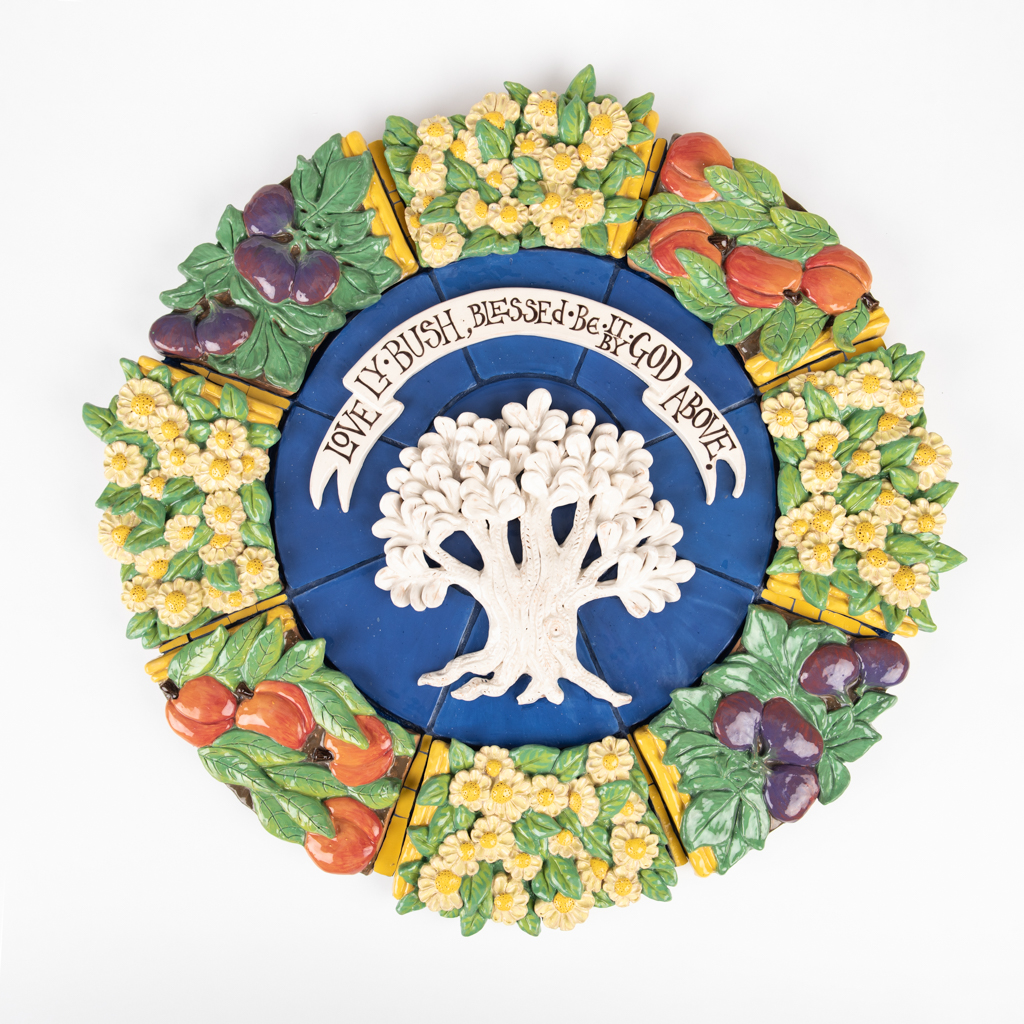
Gwerful Mechain* was a well-known and popular Welsh female poet active between around 1460 and 1502. As well as producing devotional poetry that explored the more usual themes of Christianity, she wrote a number of poems that focused on more profane matters.
Mechain’s best-known work is entitled ‘Poem to the Vagina’ – although braver translators insist that the title is actually ‘Ode to the Cunt’.** (As discussed elsewhere, I think that this is the more likely original title given that the word Cunt was not freighted with the negative, vicious connotations we know it to have today).
In this poem, Mechain starts out by observing that men love to praise the beauty of women’s various physical attributes – the face, the eyes, the hair, the arms and so on – but singularly fail to mention the best and most wondrous part of the female body. She goes on to correct this, praising the ‘circle of greeting’ in many beautiful lines and finishing the poem with the declaration ‘A girl’s glade, it is full of love/Lovely bush, blessed be it by God above’.
I was very struck by what a ‘modern’ sensibility Mechain shows herself to have had in this poem: her straightforward, no-nonsense approach to the subject even puts most of the ‘enlightened’ contemporary society we live in today to shame.
I had the good fortune to discover this poem during a visit to the exhibition ‘Medieval Women’ at the British Library*** in January 2025. This coincided with my starting work on a tile panel based very closely on the stunningly beautiful and intricate painted terracotta relief panels made by the Della Robbia dynasty in Florence during the Renaissance – a time period dovetailing exactly with Gwerful Mechain’s active years. I saw a wonderful example of one of these plaques at the National Museum of Scotland in Edinburgh in early December last year, **** which enchanted me so much that I was compelled to try making one myself.
The majority of the Della Robbia plaques – iconic and instantly recognizable with their beautifully ornate carved frames depicting fruits, leaves and flowers, around cobalt blue tiles contrasting with bright white relief sculptures – mostly depicted stories and figures from the Bible and were commissioned by churches as devotional items.
This gave me the idea to make a Della Robbia style devotional plaque of my own, on a more earthly subject. Gwerful Mechain’s poem gave me the idea to make mine about celebrating the overlooked, in fact looked-down-upon, part of the human body – the one part that uniquely and specially belongs to the baby-making half of the human race. My homage to Gwerful, and the Della Robbias, has the final line of ‘Poem to the Vagina’ on a typically Renaissance-esque device of text on a curling ribbon, over a relief of a beautiful bush and surrounded by an intricately carved frame illustrating figs, peaches and flowers – all visual metaphors and sometime slang words for the ‘girl’s glade’.
We may snigger at the thought of this precious piece of biological engineering, but if we do then we can blame the early Christian church for making us all such childish prudes -as our ‘seaside postcard’ attitudes to anything related to human procreation goes back to the teachings of these silly church men who had a terrible time wrestling with the edict to ‘go forth and multiply’ and the shame and embarrassment caused by the act itself.
* https://lithub.com/on-the-gleefully-indecent-poems-of-a-medieval-welsh-feminist-poet/
** https://fromtroublesofthisworld.wordpress.com/2015/08/09/to-the-vagina-by-gwerful-mechain/
*** https://www.bl.uk/whats-on/medieval-women/
**** https://www.nms.ac.uk/search-our-collections/collection-search-results?entry=398706